

Big studios. Small startups. AAA games. Mobile apps. Everywhere I’ve worked, same pattern.
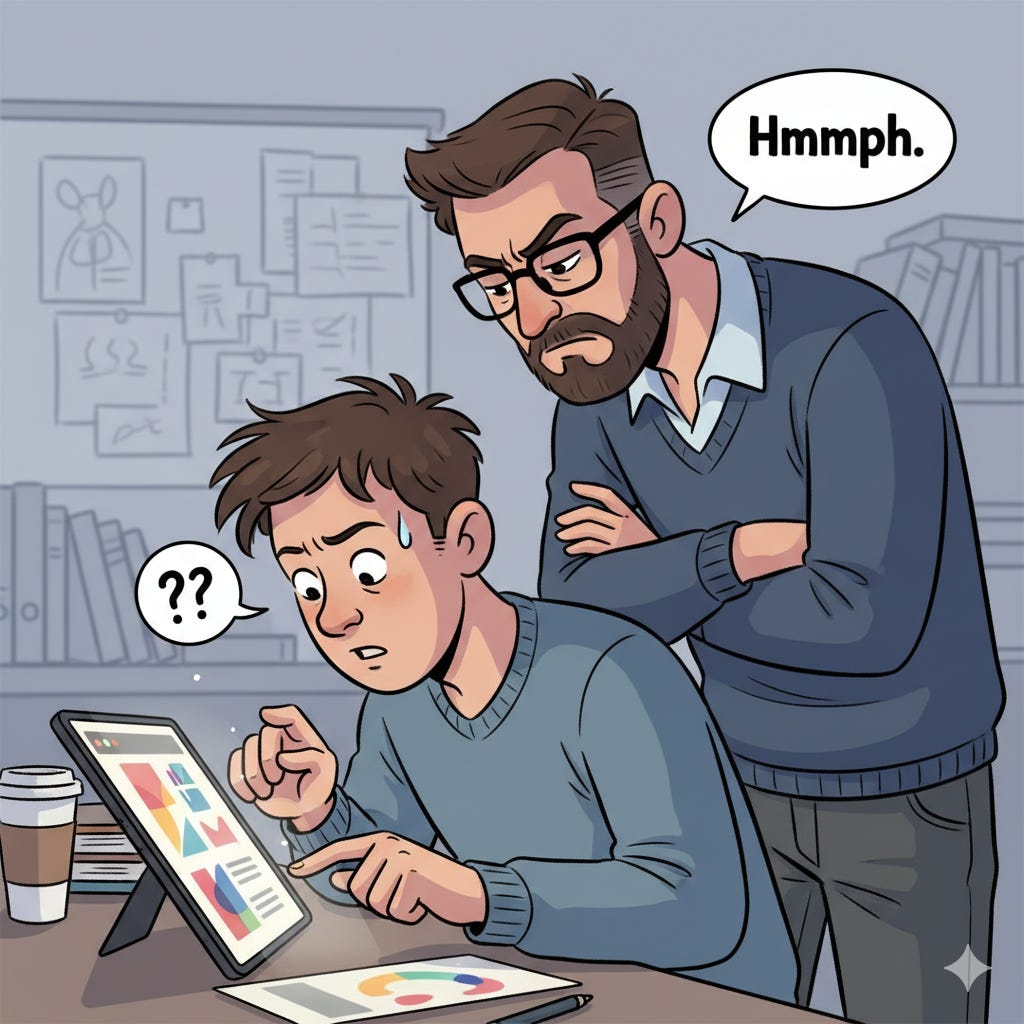
Junior designers don’t show their work until it’s “ready.”
They disappear for weeks. Radio silence. Then finally—finally—they drop the designs in Slack or send the Figma link.
And I can see immediately that it’s been going in the wrong direction for two weeks.
They think asking for feedback is a sign of weakness.
A cry for help.
Like showing unfinished work means they’re not good enough yet.
So they wait. Polish. Refine. Try to make it perfect before anyone sees it.
Here’s the problem:
By the time they show me the work, they’ve invested hours into a direction that doesn’t work.
Now I have to tell them.
And because they’ve invested so much, because they thought this was “ready,” the feedback lands harder than it should.
They get defensive. Or crushed. Or both.
And here’s the thing… it’s not their fault.
Nobody taught them that feedback isn’t something you get when you’re done.
It’s how you make good work in the first place.
Nobody taught them that asking “does this direction feel right?” after two hours is smarter than presenting finished work after two weeks.
Nobody taught them that showing messy, half-baked ideas is actually a sign of confidence, not weakness.
Because confident designers know: the work isn’t about proving you’re good. It’s about solving the problem.
Why feedback is the most important skill:
You can learn Figma. You can learn design systems. You can learn accessibility guidelines and color theory and typography and all of it.
But if you can’t ask for feedback early?
If you can’t hear criticism without shutting down?
If you can’t give feedback without crushing people?
You’re going to struggle. For years. Maybe forever.
I know because I struggled with this.
I used to think feedback was judgment. That asking for help meant I didn’t know what I was doing. That giving feedback meant finding everything that was wrong.
I was wrong about all of it.
Here’s what changed for me:
I started asking my team for feedback. On my work.
Yeah.
25 years in, and I’m asking junior designers what they think about my decisions.
Not because I don’t know what I’m doing.
But because I want them to see that feedback isn’t about hierarchy. It’s about making better work.
When they see me being vulnerable enough to ask for help, they learn it’s safe to do the same.
The other side:
But here’s the thing nobody talks about.
It’s not just about receiving feedback.
Giving it wrong can destroy people.
I’ve seen designers quit after brutal feedback sessions. I’ve watched junior designers shut down and stop taking risks because someone told them their work “didn’t work” without explaining why.
I’ve given feedback that landed wrong, and watched someone’s confidence crumble in real time.
That shit stays with you.
So over 25 years, I’ve had to figure out: How do you give feedback that actually helps?
How do you tell someone their work needs major revision without making them feel like they’re the problem?
How do you push people to be better without crushing them?
Here’s what I learned:
Start by asking them what they need feedback on.
Let them explain their thinking first. Don’t interrupt.
Ask questions instead of making statements.
Make it about the work, not the person.
Use the feedback sandwich (yeah, it actually works).
Know the difference between “I don’t like this” and “this doesn’t solve the problem.”
Have scripts for when things get defensive.
Know when to bring in users/data to take yourself out of the power dynamic.
Don’t give feedback when you’re in hyperfocus mode (ADHD thing—I have to watch myself).
Alright, so...
I made something about this.
It’s the feedback framework I wish someone had taught me 20 years ago.
How to give feedback that helps people grow instead of shutting them down.
What’s in it:
The complete framework I use with my teams
Scripts for difficult situations (fragile juniors, senior egos, conflicting stakeholders)
Questions to ask instead of statements to make
Email/Slack templates for written feedback (because that’s even harder)
A one-page cheat sheet you can keep open during feedback sessions
It’s called The Designer’s Feedback Kit (How to Give Feedback That Doesn’t Crush People).
25 years of figuring this out so you don’t have to.
Grab it here: Twelve bucks. Use it tomorrow.
If you manage designers, mentor designers, or just want to stop accidentally crushing people with your words?
Yeah. This might help.
Jon “show me the messy stuff” Wiggens
P.S. - Hit reply and tell me: what’s the worst feedback you ever received? Or gave? I’m curious.
Hi Jon. Firstly a great post!
Here's what happened to me. A manager once told me my work was TERRIBLE. I've never received such awful feedback and such a poor attitude. I'm not saying I haven't deserved it in the past. But never in such a rude and destructive way. I figure under such circumstances, simply don't have the conversation if you don't intend to provide constructive feedback. Just fire them if you cannot.
He'd assigned me something I was untrained, incapable of, and had zero interest in. I'll rise to any challenge. As a contractor of some 25 years, you are as junior as the janitor and as senior as the CEO, having to fulfil every position in between.
The next round of feedback I got from him, was an improvement; "not as terrible as the last time."
The result? I was the most stressed I'd ever been. I started doubting myself and lost interest in my profession which I've been doing for decades. In fact it bothered me so much that I since left the profession. As if that wasn't enough, shortly after the incident, I had a mini stroke, brought on directly by this feedback and stress, which has permanently damaged my vision. Needless to say I quit, in order to avoid this toxic individual.
With over 30 years' experience, I know that elements of what we do are subjective. But also this time has taught me some people are not worthy of being in your life (and coming near death, as I did). This was many years ago and never a day goes by without feeling the impact of this experience.
I totally agree that feedback is the lifeblood of anyone in the creative and knowledge / academic profession. We aren't usually creating stuff for ourselves, but others. Why exclude them. If we're not identifying our mistakes we're not learning. And if we're not learning we're stagnating. And there's no room for that in the world.
On a closing note, I've taken to asking a rather unusual question during interviews or meetings where I'm seeking to sell a service to someone. My question is "what's the worst thing about me, in your opinion?"
This really throws the other side. It's not intended to put them under duress. But it's really important to know what they're thinking. If there's anything bad, you need to know. It's your final opportunity to address their concerns before you end up on the scrap heap. Although uncomfortable (I'd hate to be on the receiving end of this question), it's crucial. If they mention something that you cannot form a good response to, you're probably not going to get offered what you're seeking. But you'll go away with that knowledge, and the satisfaction that you have given as good as you've received.
Take care