


I had 847 overdue tasks.
I know the exact number because I finally opened Things at 2pm on a Tuesday, already six hours into a workday where I’d accomplished absolutely nothing.
Just tab-switching and email-staring and that specific kind of ADHD paralysis where you’re simultaneously exhausted and haven’t done anything.
The app opened to a wall of red.
Overdue badges on everything. Tasks from three months ago sitting next to things from this morning. High priority. Medium priority. Work. Personal. Someday/Maybe.
Each one demanding I make a decision about it.
I stared at it for maybe ninety seconds.
Then I closed the app and felt my chest unclench for the first time all day.
That’s when I knew the system was broken.
The Thing Nobody Tells You About To-Do Lists
They’re designed for brains that work nothing like mine.
Every productivity guru sells you the same lie: if you just find the right system (the right app, the right categories, the right prioritization method) you’ll finally get your shit together.
You’ll be one of those people who calmly works through their day, checking boxes, making progress.
I tried for years.
GTD. Eisenhower matrices. Time blocking. The Pomodoro technique. I’ve used Things, Todoist, Notion, Asana, TickTick, and approximately forty-seven other apps whose names I’ve forgotten because I abandoned them after two weeks of initial enthusiasm followed by three months of guilt.
The pattern was always the same:
Week 1: This is it. This is the system that’s going to fix me.
Week 2: Okay, I just need to reorganize these categories.
Week 3: I should probably re-prioritize everything.
Week 4: Why do I have 847 overdue tasks?
Here’s what I finally understood: traditional to-do lists assume you have working executive function.
They assume you can look at a list of 37 things and your brain will calmly assess priority, estimate effort, consider deadlines, and select the optimal next action.
My brain doesn’t do that.
My brain looks at 37 things and immediately shorts out. Too many variables. Too many decisions. And every single incomplete task is just visual evidence that I’m failing at being a functional adult.
The tool designed to reduce my cognitive load was actually drowning me in it.
What I Use Instead
I talk to my phone.
That’s it. That’s the system.
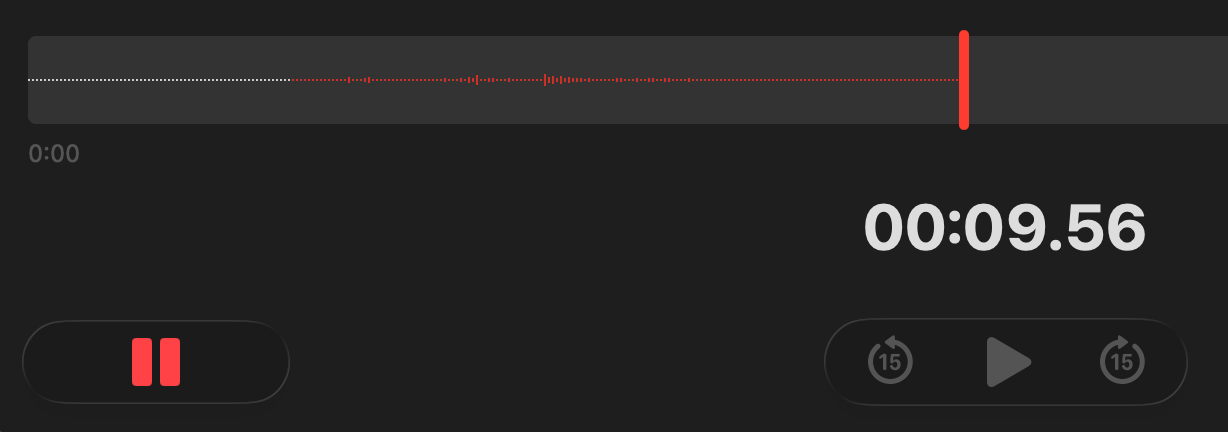
When something occurs to me (a task, an idea, something I need to remember) I open my voice notes app and I just say it. No categories. No due dates. No priority flags. Just words into the void.
“Need to email Sarah about the design review.”
“Madeline’s science project is due Friday.”
“That thing about the button states. Check if we already solved this in NHL.”
“Grocery store. Also I think we’re out of coffee.”
Then, once a day (usually morning, sometimes afternoon if I’m in potato mode), I dump all of those voice notes into Claude with this prompt:
I have ADHD and I’m looking at my brain dump from the last 24 hours. I need you to:

1. Pull out anything time-sensitive that’s happening TODAY
2. Group related things together
3. Tell me the 3 things that actually matter right now
4. Ignore everything else unless it’s urgent

Don’t organize this into a beautiful system. Don’t give me a prioritized list of 20 items. Just tell me what I should do in the next few hours. Be direct.Claude reads through my chaotic voice notes and hands me back something like:
Today:
Email Sarah before end of day (you mentioned the design review is tomorrow)
Coffee run (you said you’re out)
Madeline’s science project (due Friday, probably needs supplies)
Everything else can wait.
That’s it. Three things. Sometimes two. Sometimes one.
No system to maintain. No overdue tasks haunting me. No decisions about whether something is high priority or medium priority or “someday/maybe” which is just a polite way of saying “never.”
Why This Works (For My Brain)
The voice notes part solves the capture problem.
I can’t lose the thought because I said it out loud immediately.
No friction.
No “let me open the app and find the right project and pick a due date.”
Just talk.
The AI part solves the triage problem.
I don’t have to look at everything and make executive function decisions about all of it. Claude does that. It has working executive function. I don’t.
And here’s the critical part: nothing carries over.
Every day is a blank slate. If something didn’t make it into today’s top three and it actually matters, it’ll come up again.
I’ll voice note it again.
It’ll keep surfacing until it gets done or until I realize it didn’t actually matter.
There’s no growing list of shame. No “you’ve been putting this off for six weeks” guilt trip. Just: what matters today?
It’s not optimization. It’s survival.
The Part Where I Admit My Credentials
I’m a design lead at EA. I’ve been in the gaming industry for 25 years. I’ve built UI systems used by millions of people across FIFA, NHL, UFC. I led the project that unified design systems across multiple sports franchises.
I can architect enterprise-level design frameworks.
I cannot manage a to-do list.
And I’m done pretending that’s a character flaw.
The Thing About Productivity Systems
Every single one of them was designed by someone whose brain works differently than yours.
They assume:
You can hold multiple priorities in your head
You can estimate how long things take
You can resist the dopamine hit of reorganizing your categories instead of doing the actual work
Future-you will have the same energy and context as right-now-you
If your brain doesn’t work that way, the system isn’t “helping” you.
It’s just a daily reminder that you can’t do the thing that “everyone else” finds simple.
So here’s my actual advice: stop trying to fix yourself into fitting their system.
Build something weird that works.
Use AI as a prosthetic for the executive function you don’t have.
Use voice notes because typing feels like friction.
Use daily resets because carrying cognitive debt makes you want to crawl into bed.
Use whatever ugly, duct-taped, unconventional system actually lets you function.
I don’t use AI to be more productive than you.
I use AI to be functional like you.
There’s a difference.
Your Turn
What productivity system are you still trying to make work even though it’s been failing you for years?
What’s the “simple” organizational method that makes you feel like you’re broken?
Tell me in the comments. I want to know what we’re all still pretending works.